
Skin Rejuvenation
Diathermy Treatment
A minor in-clinic procedure using controlled electrical current (diathermy) to treat small, superficial, benign skin lesions such as skin tags, cherry angiomas, thread veins and milia — not suitable for any suspicious or changing lesion, which must be assessed by a GP or dermatologist first.
Authored by Kelly Rafique, published 13 August 2026.
Clinically reviewed by Kelly Rafique, last reviewed 29 August 2026.
Diathermy is a minor in-clinic procedure that uses a controlled electrical current to precisely treat small, superficial skin lesions. In aesthetic practice it's commonly chosen for concerns such as skin tags, cherry angiomas (small red blood spots), benign facial thread veins, milia-like lesions, sebaceous hyperplasia, and some benign pigmentation spots (where appropriate). Treatment is performed under local anaesthetic to keep you comfortable, and the appointment is usually 20–45 minutes depending on the number and type of lesions being treated. It can be suitable for clients who want a quick, targeted option with minimal downtime. It isn't appropriate for anyone with a suspicious or changing lesion, or where there's uncertainty about the diagnosis — these must be assessed by a GP/dermatology first. Where suitable, we may recommend Map My Mole® as a way to assess lesions prior to removal, providing an expert dermatology report to guide whether a lesion appears appropriate for cosmetic treatment in clinic or should be referred for medical assessment.
Concerns Addressed
- Skin Tags
- Cherry Angiomas
- Small Lesions

Performed by
Kelly Rafique
Aesthetic Nurse Practitioner
Before & After
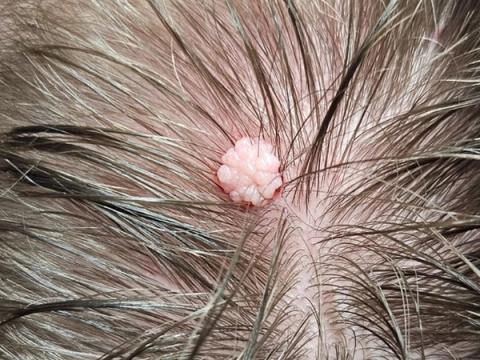
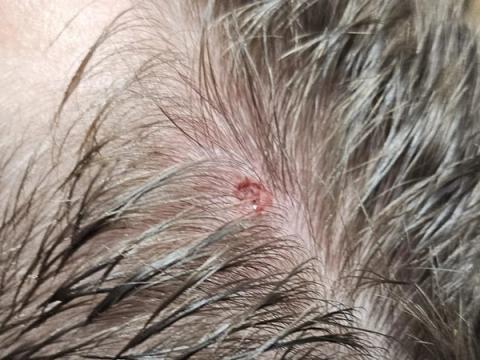
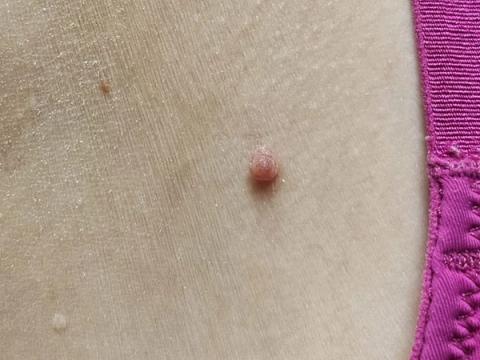
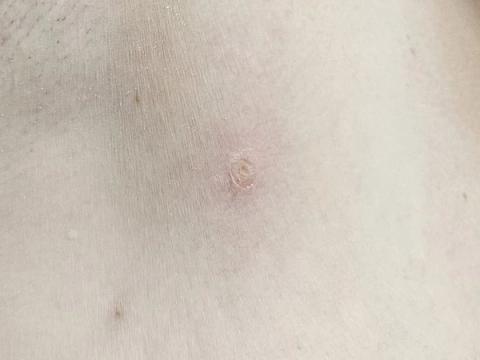
Why Choose a Registered Nurse Prescriber?
Because your safety means everything to me.
- Over 17 years of NHS experience
- A degree in adult nursing
- A Master's in Advanced Clinical Practice
- Registered as a non-medical prescriber with a V300 qualification
- Level 7 qualification in History Taking and Physical Examination for Advancing Practice
What Happens During Treatment
You'll arrive for a brief consultation to confirm the area(s) to be treated, check your medical history, and ensure the lesions are suitable. We'll take pre-treatment photographs for your confidential records. If there's any uncertainty about a lesion, we may advise a Map My Mole® assessment first, which involves dermoscopic imaging and a report from a GMC-registered Consultant Dermatologist (typically returned within 72 hours), before proceeding with removal. A local anaesthetic is then applied (topical and/or a small injection depending on the area). Once numb, we use a fine diathermy tip to treat each lesion with short, controlled applications of heat. The area is cleaned, and a soothing ointment will be applied. Before you leave, we'll talk you through aftercare, what's normal during healing, and when to contact us for review.
Expected Results
Most lesions can be treated in a single session. Results become more noticeable as any small scabs come away and the skin settles, usually within 5–14 days.
How long results may last: Some lesions may need a further session, typically booked around 6 weeks later to allow for full healing.
Downtime & Recovery
Downtime is usually minimal. Expect temporary redness, mild swelling, and small superficial scabbing/crusting at the treatment points. Treated areas can look darker initially before they flake away. Mild tenderness or a "sunburn-like" feeling is common for 24–48 hours.
Side Effects, Risks & Contraindications
Possible side effects
- Temporary redness and mild swelling
- Small superficial scabbing or crusting at treatment points
- Treated areas can look darker initially before flaking away
- Mild tenderness or a "sunburn-like" feeling for 24–48 hours
Risks
- Burning, blistering, infection, or delayed healing if aftercare isn't followed
- Post-inflammatory hyperpigmentation or hypopigmentation, particularly in deeper skin tones or with sun exposure while healing
- Uncommon but possible scarring, especially on the chest/back or in those prone to keloids
Contraindications
- Suspicious lesions (e.g. changing shape/colour, irregular borders, bleeding without reason) — these need GP/dermatology assessment, not cosmetic removal
- Pregnancy (device-dependent assessment)
- A pacemaker or implanted electrical device (device-dependent)
- Active skin infection, e.g. a cold sore in the area
- Uncontrolled diabetes affecting healing
- A strong history of keloid scarring
Aftercare
Keep the area clean and dry for the first 24 hours. After that, cleanse gently and apply a thin layer of the recommended healing ointment if advised. Do not pick or scratch any scabs — allow them to fall away naturally. Avoid swimming, saunas/steam rooms, heavy sweating, and make-up directly over treated points until fully healed. Skip exfoliants and "active" skincare (retinoids, acids, benzoyl peroxide, vitamin C) on the area for around 5–7 days or until settled. Protect the skin with SPF 50 daily and avoid direct sun exposure and sunbeds during healing to reduce pigmentation risk. Contact the clinic if you develop increasing pain, spreading redness, heat, swelling, pus, or feel unwell.
Pricing
| Treatment — One Area | £80 |
| Treatment — Two Areas | £150 |
| Treatment — Three Areas | £210 |
| Campbell de Morgan spots | Price on consultation |
| Cherry angiomas | Price on consultation |
| Milia | Price on consultation |
| Skin tags | Price on consultation |
| Spider naevi | Price on consultation |
| Thread veins | Price on consultation |
| Telangiectasia | Price on consultation |
| Age spots | Price on consultation |
| Pigmentation concerns | Price on consultation |
| Non-pigmented moles, where appropriate and within scope | Price on consultation |
| Seborrhoeic keratosis | Price on consultation |
| Filiform warts | Price on consultation |
| Common warts | Price on consultation |
| Verruca / plantar warts | Price on consultation |
| Sebaceous cysts | Price on consultation |
| Sebaceous hyperplasia | Price on consultation |
| Syringoma | Price on consultation |
| Xanthelasma | Price on consultation |
| Dermatosis papulosa nigra | Price on consultation |
| Blue naevi | Price on consultation |
Consultations & Reviews
| Diathermy Treatment Review | £0 |
| Consultation | £0 |
Frequently Asked Questions
How long does an appointment for Diathermy Treatment take?
20–45 minutes, depending on the number and type of lesions
Is there any downtime after Diathermy Treatment?
Downtime is usually minimal. Expect temporary redness, mild swelling, and small superficial scabbing/crusting at the treatment points. Treated areas can look darker initially before they flake away. Mild tenderness or a "sunburn-like" feeling is common for 24–48 hours.
What results can I expect from Diathermy Treatment?
Most lesions can be treated in a single session. Results become more noticeable as any small scabs come away and the skin settles, usually within 5–14 days.
How long do the results of Diathermy Treatment last?
Some lesions may need a further session, typically booked around 6 weeks later to allow for full healing.
Diathermy is offered for the removal of benign-appearing, superficial lesions only. It is not a diagnostic service and does not confirm whether a lesion is benign or malignant. Any lesion that is new, changing, irregular, symptomatic (e.g. persistent bleeding/ulceration), or otherwise uncertain must be assessed by an appropriate medical professional (GP/dermatology) and may require specialist review (including services such as Map My Mole®) before any cosmetic removal is considered.